
· DigeeMed Editorial
Most healthcare PPC campaigns don't fail because of bad ads. They fail because the page someone lands on after clicking does nothing to earn their trust or make booking easy. PPC landing pages for healthcare are where ad spend either pays off or quietly drains away, and most clinics underinvest in getting them right.
Why PPC Landing Pages for Healthcare Are Different .
A patient clicking a healthcare ad is not the same as someone browsing for shoes. There's anxiety involved. They're dealing with a health concern, possibly an urgent one, and they're trying to quickly figure out whether this clinic is trustworthy, competent, and worth their time.
Generic pages with stock photos and vague "book an appointment" buttons don't clear that bar. Landing pages that convert patients do something specific: they reduce anxiety, answer the immediate question, and make the next step obvious and easy.
Healthcare Landing Page Optimization: The Core Elements .
Good healthcare landing page optimization starts with getting the basics right before anything else.
The headline needs to match the ad. If someone clicked on "affordable root canal in Gurgaon," the page should say something directly related to that. A mismatch between ad and landing page is one of the most common conversion killers and it also hurts Quality Score.
Beyond the headline:
One clear purpose per page. A page trying to promote five services simultaneously converts poorly for all of them
A visible, specific call to action above the fold. "Book a free consultation" beats "contact us" every time
Doctor credentials and clinic information placed where patients can see them without scrolling
No navigation menu. Landing pages should remove exits, not create them
Trust Signals on Landing Pages: Non-Negotiable for Healthcare
Trust signals on landing pages matter more in healthcare than in almost any other category. Patients are making decisions about their bodies and their money. They need reassurance before they fill in a form.
Trust signals that genuinely move the needle:
Doctor names, qualifications, and photos, real ones not stock imagery
Accreditations, certifications, or hospital affiliations displayed clearly
Patient testimonials with specific outcomes, not generic praise
Google ratings or third-party review scores where visible
Clear privacy statements near any form, patients worry about their data
Doctor landing page conversion rates improve noticeably when the doctor is visible and credible on the page itself. A name and a face changes how the page feels entirely.
Medical PPC Landing Page Design: Mobile Comes First
Medical PPC landing page design that isn't built for mobile is leaving a significant portion of conversions on the table. In most Indian metro markets, the majority of healthcare search traffic comes from phones.
Mobile-friendly landing pages for healthcare need:
Large, tappable buttons, especially the call or booking button
Forms with as few fields as possible, name, phone number, and preferred time is often enough
Text that doesn't require zooming to read
Click-to-call functionality front and centre
Designing for desktop first and adapting for mobile later is the wrong order. Start with the phone screen and build up from there.
Page Load Speed Healthcare: Faster Pages Book More Patients
Page load speed healthcare is not a technical afterthought. It's a conversion issue.
A page that takes more than three seconds to load loses a substantial share of visitors before they even see the content. For mobile users on variable connections, this is even more pronounced. Someone with a health concern who clicks an ad and stares at a loading screen for four seconds is gone, probably to a competitor.
What affects load speed most:
Uncompressed images, the most common culprit on clinic pages
Too many third-party scripts running on page load
Poor hosting or unoptimised code
A basic speed audit through Google PageSpeed Insights costs nothing and usually surfaces the main issues quickly.
Appointment Form Optimization: Where Conversions Actually Happen
Appointment form optimization is worth spending real time on because the form is the final step between interest and conversion and it's where a surprising number of clinics lose people.
Common mistakes:
Asking for too much information upfront, date of birth, insurance details, medical history
No indication of what happens after submission or how quickly someone will respond
Forms that don't work properly on mobile
No reassurance about data privacy near the form itself
The simpler the form, the higher the completion rate. If you need more patient information, collect it after the booking is confirmed, not before.
Clinic Landing Page Best Practices: Structure That Works
Clinic landing page best practices generally follow a consistent structure for good reason. It works because it follows how a patient's mind moves through the page.
A structure that converts:
Headline matching the ad and the patient's specific concern
Subheadline with a clear benefit or differentiator
Trust signals, doctor photo, credentials, reviews, visible early
Short description of the service or procedure
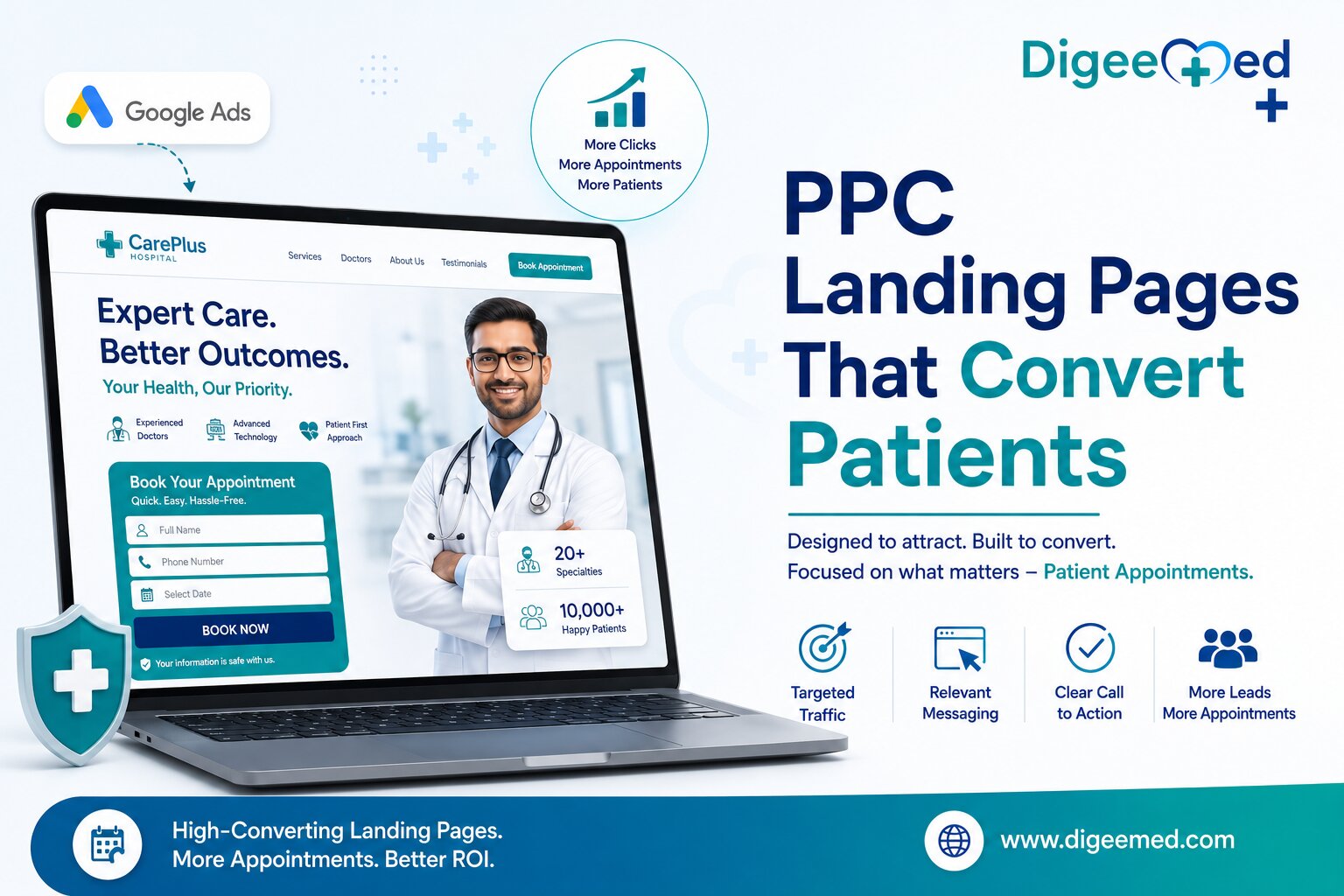
Appointment form or call button, prominent and simple
Additional trust elements below, testimonials, accreditations, FAQs
Secondary call to action at the bottom for anyone who scrolled through everything
Hospital landing page strategy for multi-specialty setups should follow the same principle: one campaign, one specialty, one landing page. Sending IVF ad traffic to a general hospital homepage is a conversion disaster.
A/B Testing Landing Pages: How to Actually Improve Over Time .
A/B testing landing pages is how clinics move from guessing to knowing. The idea is simple: run two versions of a page simultaneously, change one element, see which performs better.
Elements worth testing in healthcare:
Headline wording, especially benefit-led vs. feature-led
Call-to-action button text and colour
Form length, three fields vs. five fields
Placement of doctor photo or testimonials
Whether a phone number or a form converts better for your specific audience
A/B testing landing pages needs enough traffic to produce statistically meaningful results, so smaller clinics may need to run tests over several weeks. But even one well-run test per month produces meaningful improvements over a quarter.
Conclusion .
The ad gets the click. The PPC landing page for healthcare gets the patient. Most clinics spend the bulk of their attention on ad creative and targeting, which matters, but a poorly built landing page wastes every rupee of that effort. Get the page right and the rest of the campaign starts working considerably harder.
