
· DigeeMed Editorial
Doctors run Google Ads because competitors are doing it. Makes sense on paper. But then the account sits half-optimized, budget gets wasted on random clicks, and nobody ever calls. That's what happens when Google Ads for doctors doesn't get set up right from the start. The platform looks straightforward. It's not. Small mistakes early cost money for months before anyone notices.
Why This Matters at All .
Patients search. That's the baseline fact. They search for dentists, cardiologists, surgeons, whatever they need. Google shows them results. If a clinic's there with an ad, they might click. If the clinic isn't there, patients find someone else. Google Ads basics for healthcare sounds complicated but the core idea is simple: show up when patients are actively looking.
This beats hoping for word-of-mouth or waiting for SEO to eventually rank the site.
Setting Up the Account Without Messing It Up .
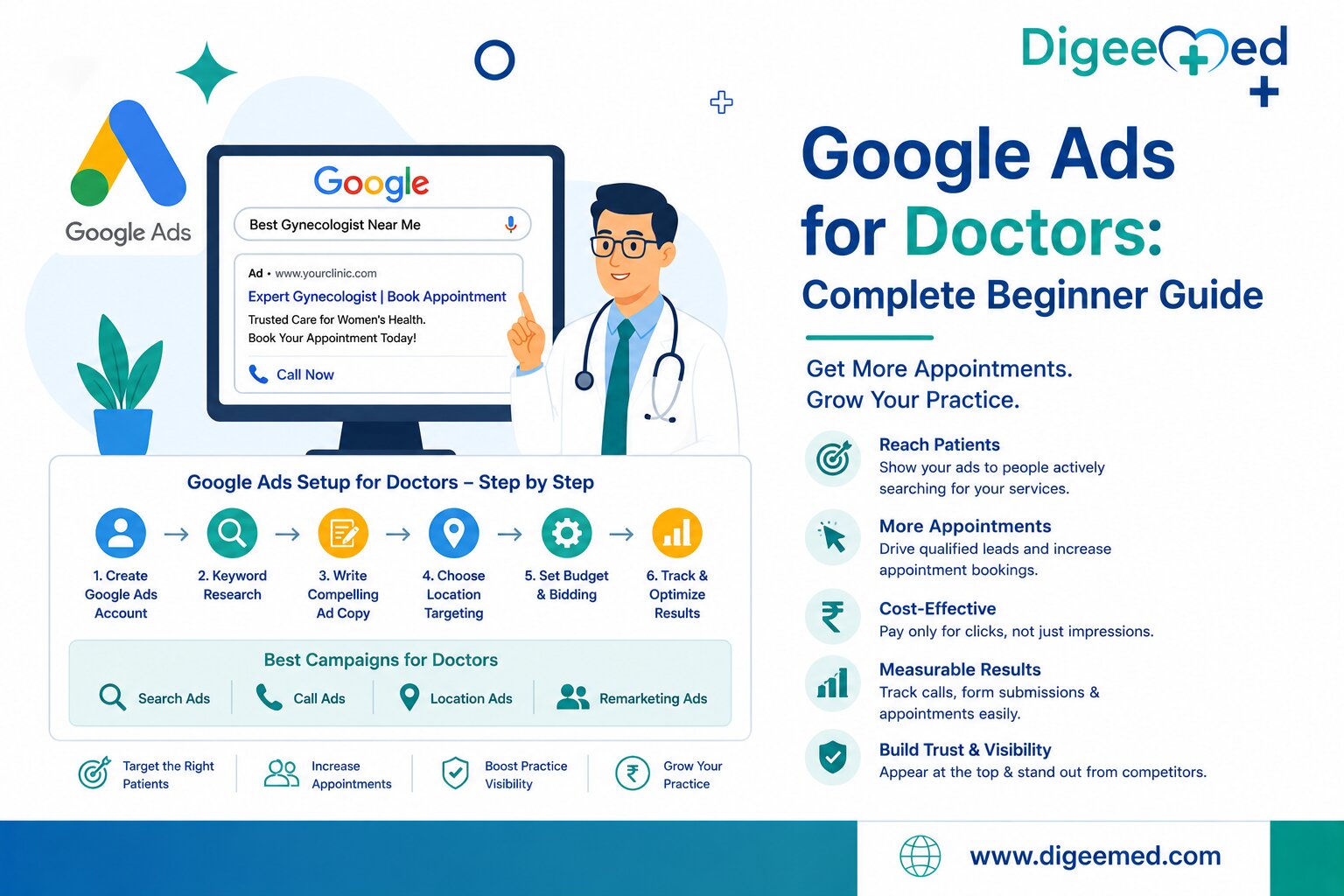
First thing: create the account. Sign into Google. Choose an objective. Pick "Leads" if the goal is phone calls or form submissions. Pick "Website traffic" if the clinic wants people visiting the site first.
Add business information carefully. Address. Phone. Hours. Getting these wrong creates problems later when Google tries to verify the business actually exists. Mismatched information confuses potential patients too.
Campaign type matters. Search campaigns work best for most clinics because they show ads when people search relevant terms. Display campaigns show ads on websites. Video shows on YouTube. Start with Search. Expand later once results show what's working.
Location Targeting: Stop Wasting Money on Random Places .
A clinic in Delhi doesn't need ads showing in Mumbai. That's obvious but clinics still do it. Limiting ads to the actual city or even specific neighborhoods cuts wasted clicks dramatically.
Distance radius targeting helps too. Set it to show ads within five or ten kilometers of the clinic. Patients farther away probably won't come anyway. Why pay for their clicks.
Keywords: Getting The Right People Searching .
Keyword match types determine everything. Broad match shows ads for loosely related searches. "Dentist" might show ads for "dental supplies," "tooth pain relief," random stuff. That wastes budget.
Phrase match is better. "Pediatrician Delhi" shows ads for that phrase specifically. Exact match is most precise. Only shows for exact searches. Exact match gets fewer impressions but the clicks that come are usually from people actually ready to book.
Starting with phrase or exact match works better than broad match for most medical practices. The goal is qualified clicks, not just clicks.
Examples that work:
"cardiologist near me"
"emergency dentist in sector 5"
"knee pain specialist"
"same-day appointment dermatologist"
Vague terms like "health" or "clinic" don't work. Nobody searching those words is actually looking for an appointment.
Ad Copy: Make It Clear What You Do .
An ad needs to say what the clinic actually does. Not "healthcare services." That's useless. Say "Root canal specialist" or "Pediatrician accepting new patients" or "Emergency orthopedic care."
Include something that matters to the patient. Same-day appointments. Experienced team. Accepting insurance. Whatever the clinic actually offers that patients care about.
The call to action should be obvious. "Book now." "Call today." "Schedule appointment." Something that tells the patient what to do next.
Ad Extensions Make Ads Better .
Ad extensions for doctors add extra information without extra cost. A phone number lets patients call directly from search results. Location extension shows the address. Sitelink extension adds buttons for specific pages like "Book Appointment" or "Treatments."
These seem small. They're not. Click-through rates improve noticeably when extensions are there.
Healthcare Ad Policy Compliance
Healthcare ad policy compliance matters because Google takes this seriously. Don't promise cures. Don't guarantee results. Don't compare yourself to competitors in ways that are misleading. Don't use language designed to scare people.
What's allowed: describing services offered, listing qualifications, asking for appointments, showing patient testimonials if they're genuine.
Breaking these rules gets ads disapproved. Accounts suspended. Don't do it.
Landing Pages That Actually Convert .
Where the ad points determines whether people actually book or just leave. A dentist's ad about teeth whitening shouldn't land on the homepage. Land on the teeth whitening page.
The page needs to load fast on mobile. Most searches happen on phones. Slow loading means people leave before seeing anything.
Show the doctor's name. Specialty. Qualifications. Make it clear what's being offered. Include visible contact options above the fold. Phone number. WhatsApp. Booking form. Don't hide this stuff.
Reviews help too. Real patient testimonials. Star ratings. Things that build trust with someone considering whether to call.
Tracking: Know Which Ads Actually Work .
Call tracking for clinics means knowing which ads bring actual patients. Without tracking, there's just guessing.
Google call extensions track calls made from ads. Call tracking numbers on landing pages show which calls came from which ads. Form submissions get tracked. Bookings get tracked. All of this connects back to specific keywords and ads.
This data is what lets a clinic know whether to spend more on something or stop wasting money on it.
Budget Decisions That Make Sense .
Google Ads budget setting doesn't require huge amounts of money. Some clinics run on five to ten thousand monthly and see results. The key is spending enough to get actual clicks and conversion data. Below that threshold, there's not enough information to judge whether something's working.
Start conservative. Track results. Expand spend on what's working. Pause what's not.
Monthly Spending Stays Predictable .
Set a daily budget. Google multiplies it across the month. Five thousand monthly means about one hundred sixty per day. Some days spend slightly more, some less, but the total stays controlled. No surprise bills.
Conclusion .
Google Ads for doctors works when it's set up right from the beginning. Correct targeting. Clear ads. Strong landing pages. Proper tracking. A clinic doing these things sees patient inquiries within the first couple weeks. That feedback determines whether to expand or adjust. The barrier isn't complexity. It's just starting.
